The service
How it works
The crew take samples and readings in normal service. Everything is analysed in an accredited laboratory and interpreted against the engine's performance data and history. The vessel and the office receive a report with findings and recommendations for each unit.
Where the samples and readings come from
Scavenge drain oil is drawn from every cylinder, with samples of the fresh cylinder oil and the crankcase system oil, and fuel samples from points in the vessel's fuel system. At the same time the crew record the engine performance data: load, Pmax and compression pressure for each unit, fuel pump index, scavenge air pressure and temperature, and the cylinder lubricator settings.
Taking everything together is what makes the chemistry and the engine readings comparable. A sample taken on a different day from the readings describes a different engine.
Fuel
Where the fuel samples come from
Three points in the fuel system: before the purifiers, after them, and before the engine. The differences between them are what the report reads.
Five steps
The service, step by step
-
Sampling kits go to the vessel
We send sampling kits to the vessel with containers, labels and the Sample Submission Form.
-
Samples and readings are taken together
The crew draw the samples and record the performance data at the same time, following the Sampling Instructions.
-
Samples travel to the laboratory
The samples go by courier to a laboratory accredited to ISO/IEC 17025, with a pro forma invoice for customs. All analysis is done in the laboratory; nothing is tested on board. The system oil, fuel and water content of each drain oil sample is then determined with Flame ADT, so that every result can be corrected for dilution.
-
The results are interpreted
The laboratory results are read with the performance data and the engine's history from earlier reports, and every finding is cross-checked against the rest.
-
You receive the report
The report gives findings and recommendations for each unit, with trends against earlier reports, for the vessel and the technical office.
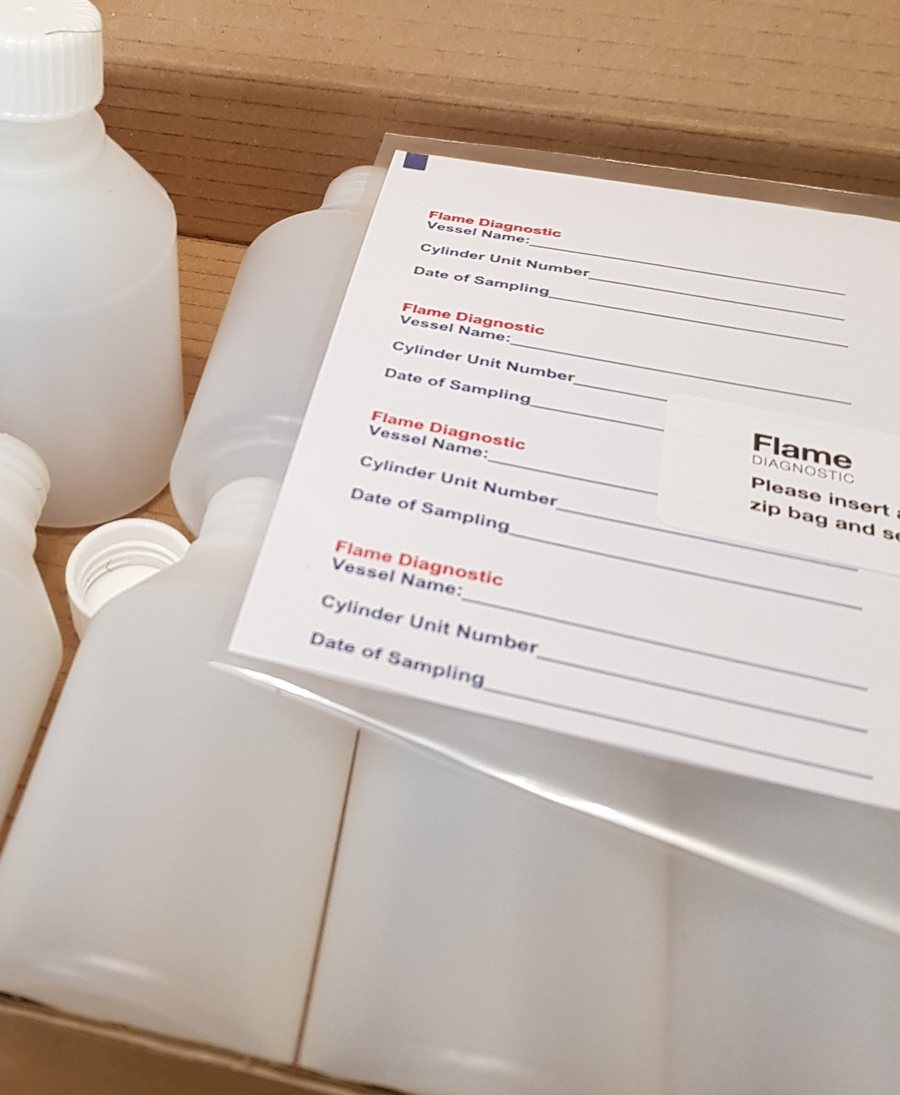
Flame SDA follows the same steps with the drain oil, fresh cylinder oil and system oil samples, and the fuel samples when the purifier and service tank check is taken, but without the performance data.
Guidance
Meeting the designers' recommendations
The two-stroke engine designers treat laboratory results as the reference for decisions on feed rate, cylinder oil BN and cylinder condition. Flame SDA and Flame Diagnostic both provide that laboratory analysis for MAN B&W, WinGD and UE engines. Flame SDA reads it on a cylinder-oil basis with a concise assessment of each unit; Flame Diagnostic adds the reading against the performance data.
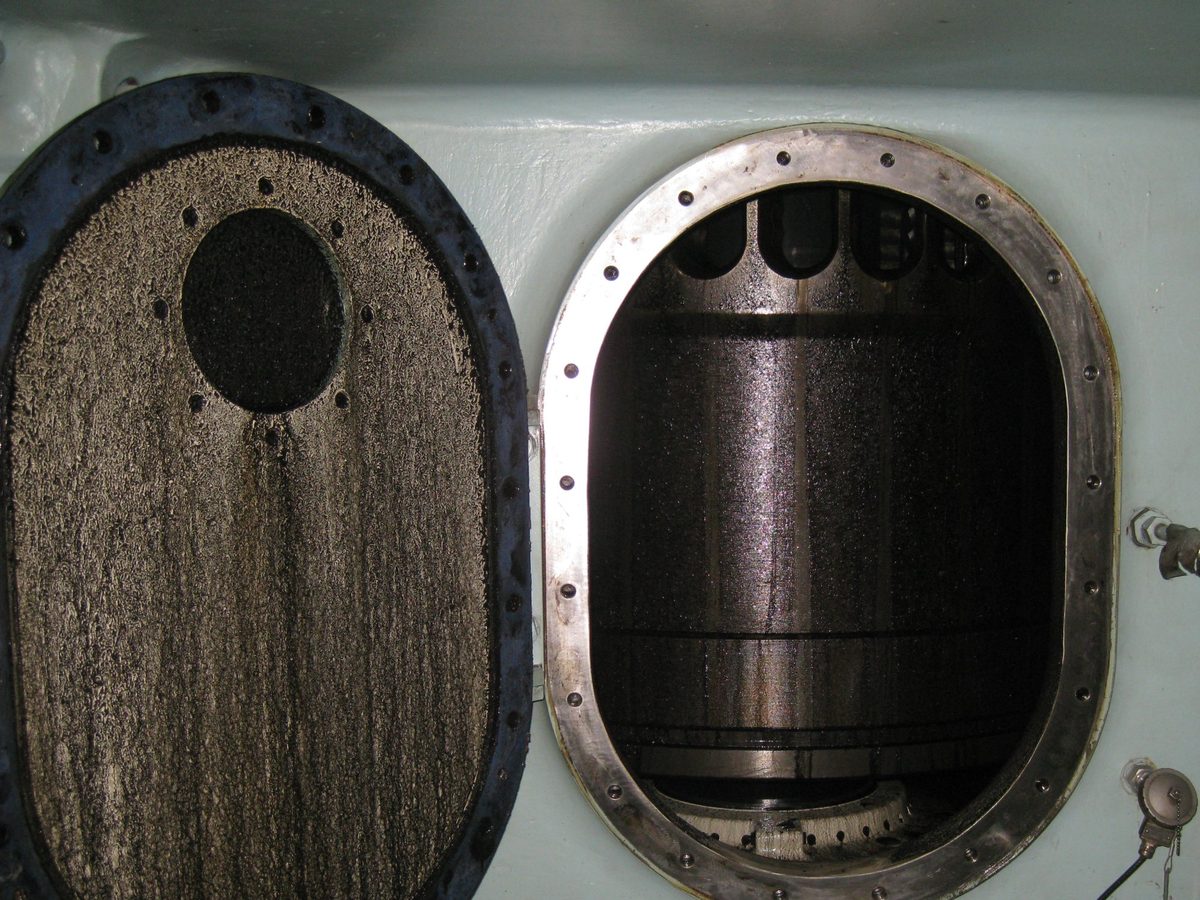
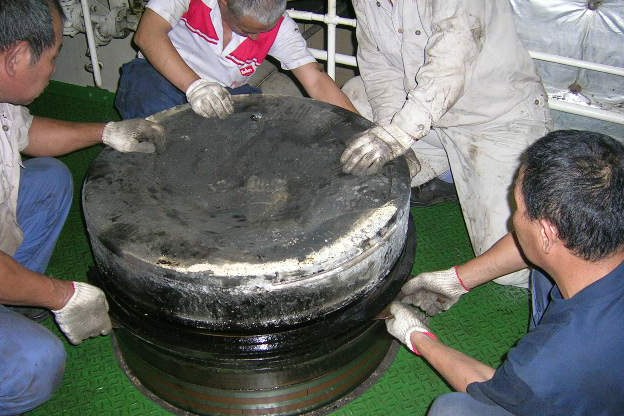
Scavenge drain oil analysis by an accredited laboratory at least every three months or 1,500 running hours, with monthly inspection through the scavenge ports. Total and magnetic iron, read against limits that depend on fuel sulphur and corrected for feed rate, and residual BN against the fresh cylinder oil.
Regular analysis of residual BN and iron for each cylinder, repeated after any change of feed rate, fuel or cylinder oil. The results place each cylinder in a safe, alert or danger band, which decides whether the feed rate or BN should change.
UE engines are sampled and reported on the same basis. Sampling intervals are agreed for each vessel so that they meet the designer's requirement for the engine. Summaries are for orientation; always refer to the current issue of the designer's guidance.
Getting accurate results
Most errors come from the data, not the analysis: performance readings recorded inaccurately, samples taken at a different time from the readings, or samples drawn the wrong way. Following the Sampling Instructions avoids all three.
Talk to us about your fleet
Tell us the engine types and the number of vessels, and we will come back to you with how sampling would work for you and what the reports would cover.