Flame Marine reports
Flame SDA
Scavenge drain analysis for MAN B&W, WinGD and UE engines, built around the engine designers' recommended scrape-down oil reporting. It costs less than Flame Diagnostic because it does less, and it delivers much more than a laboratory sheet: every result corrected for dilution, and a concise assessment of each cylinder.
What you get
- Laboratory analysis of scavenge drain oil from every cylinder, tested in a laboratory accredited to ISO/IEC 17025, to ASTM, ISO and IP methods: iron, total and magnetic, wear metals, residual BN, water, contaminants and additive elements.
- Every result corrected for dilution by system oil, fuel and water with Flame ADT and reported on a cylinder-oil basis, the same correction that Flame Diagnostic applies. The kit takes a sample of the fresh cylinder oil and of the system oil with the drain oil, as Everllence SL2023-738 asks, so that the correction is referenced to the oils actually in the engine.
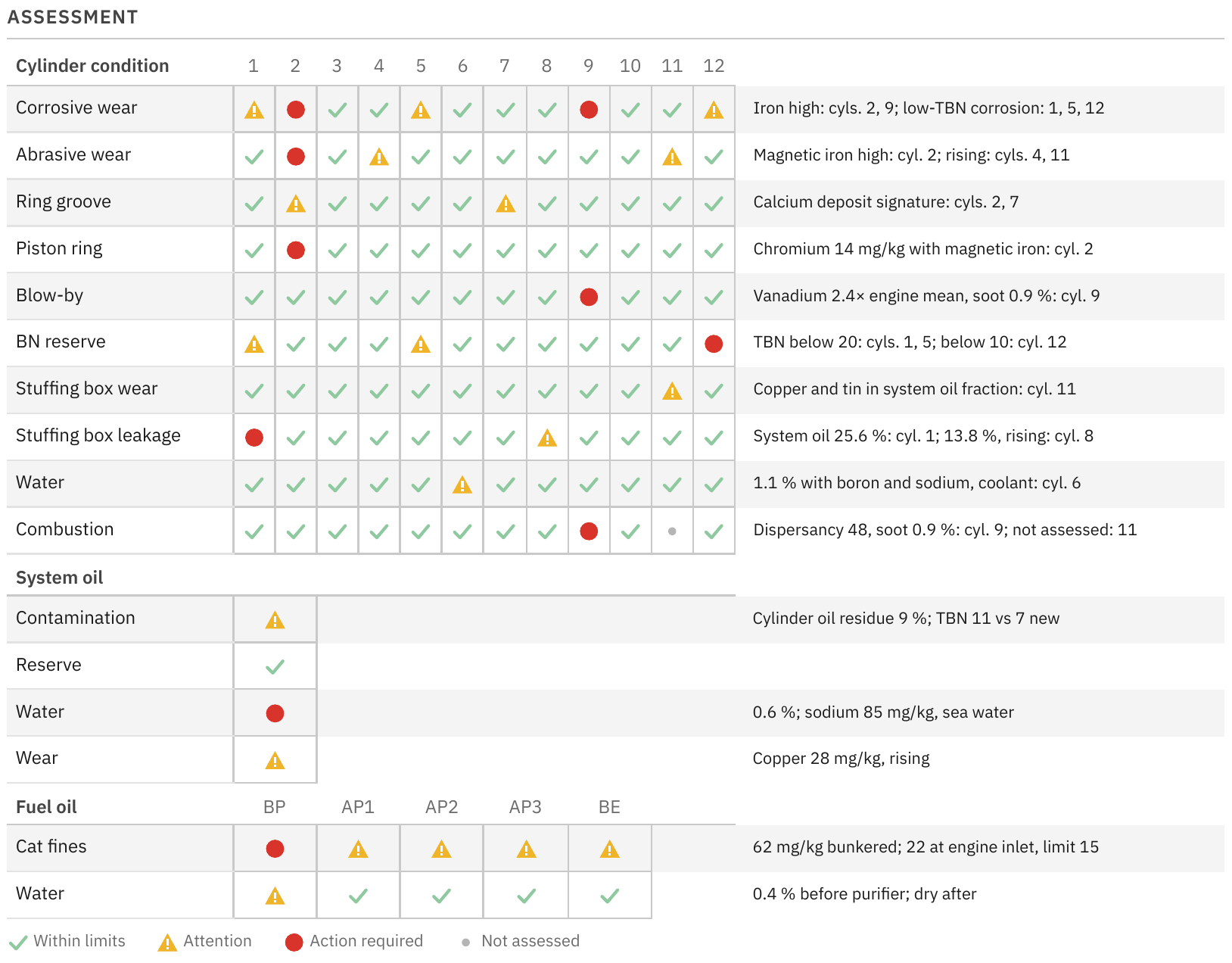
- For each cylinder: corrosive and abrasive wear told apart, from magnetic and total iron read against residual BN; the trend against the vessel's earlier samples; comparison with the other cylinders; and a stuffing box or water finding when the sample shows one. A short comment wherever something needs attention.
- The crankcase system oil, reported alongside the cylinders: contamination, wear metals, and whether the stuffing boxes are keeping the cylinder residues out of it.
- Practical lubrication guidance: whether the feed rate and the cylinder oil BN suit the fuel in use, read from the drain oil.
- An optional fuel purifier check: fuel sampled before and after the purifiers (points 1 and 2 on the fuel system drawing) and analysed for catalytic fines and water. The difference shows how well the purifiers are working. A third sample before the engine (point 3) extends the check to the service tank, showing whether the fuel that reaches the engine is still as clean as the fuel that left the purifiers.
- Sampling kits, submission forms and courier documentation, as for Flame Diagnostic.
What it leaves out
Flame SDA does not use engine performance data, and its fuel samples go no further than the purifier and service tank check, so it cannot tell you why a unit's combustion has changed, verify the figures the ship reports, or read the fuel against the drain oil. It tells you, on the right basis, what the drain oil shows and which units need attention. For the full diagnosis, the same vessel can move to Flame Diagnostic at any time, and the sample history carries over.
Who it is for
Fleets that want the engine designers' recommended scrape-down oil reporting in place, with the results interpreted independently of the lubricant supplier. Laboratory reporting is widely available; an independent reading on a cylinder-oil basis is what Flame SDA adds.
Flame SDA
Drain oil from every cylinder and the crankcase system oil, the drain oil corrected for dilution so that system oil in the sample cannot hide wear or understate BN, with a concise assessment of each unit. A fuel purifier and service tank check can be added.
Covers the laboratory analysis called for in Everllence SL2023-738, including the fresh cylinder oil and system oil samples, and the WinGD Lubricants Guideline.
Flame Diagnostic
Fuel system, engine performance, and cylinder oil and condition, read together. Findings and recommendations for each unit.
The report, page by page
Inside a Flame SDA report
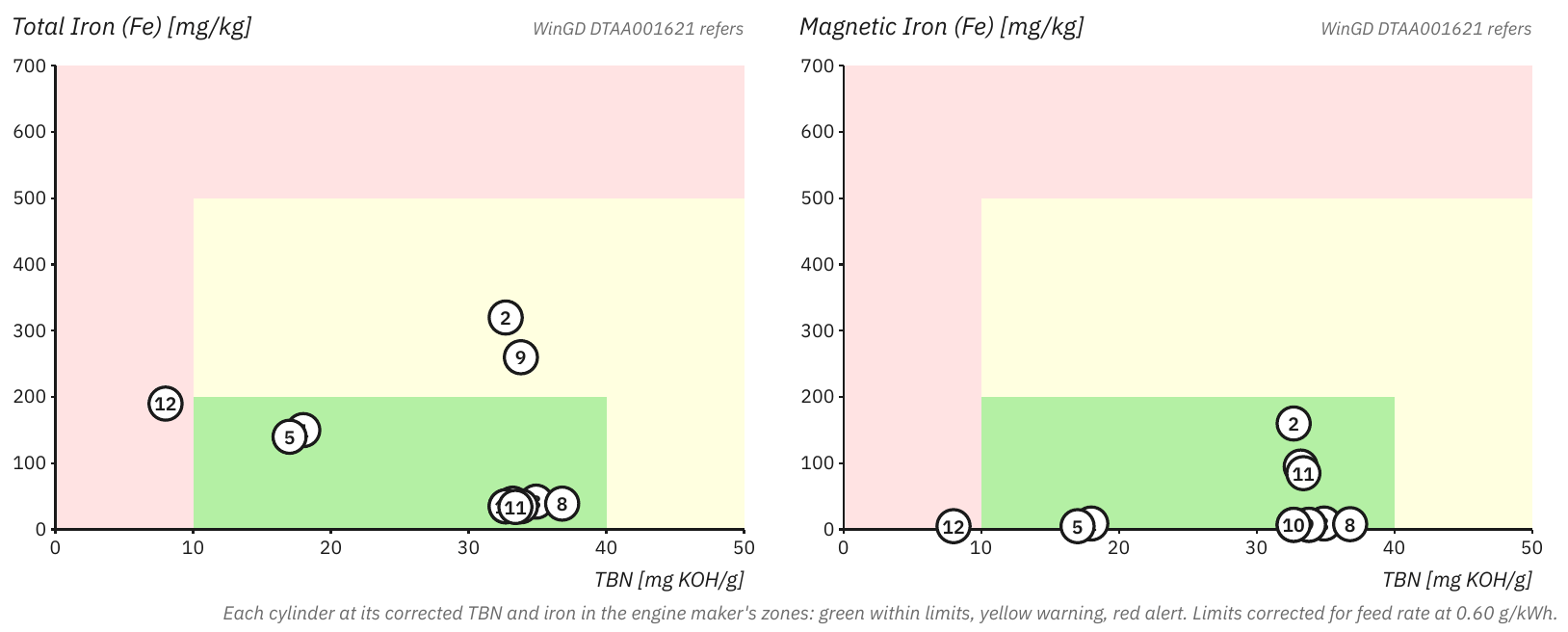
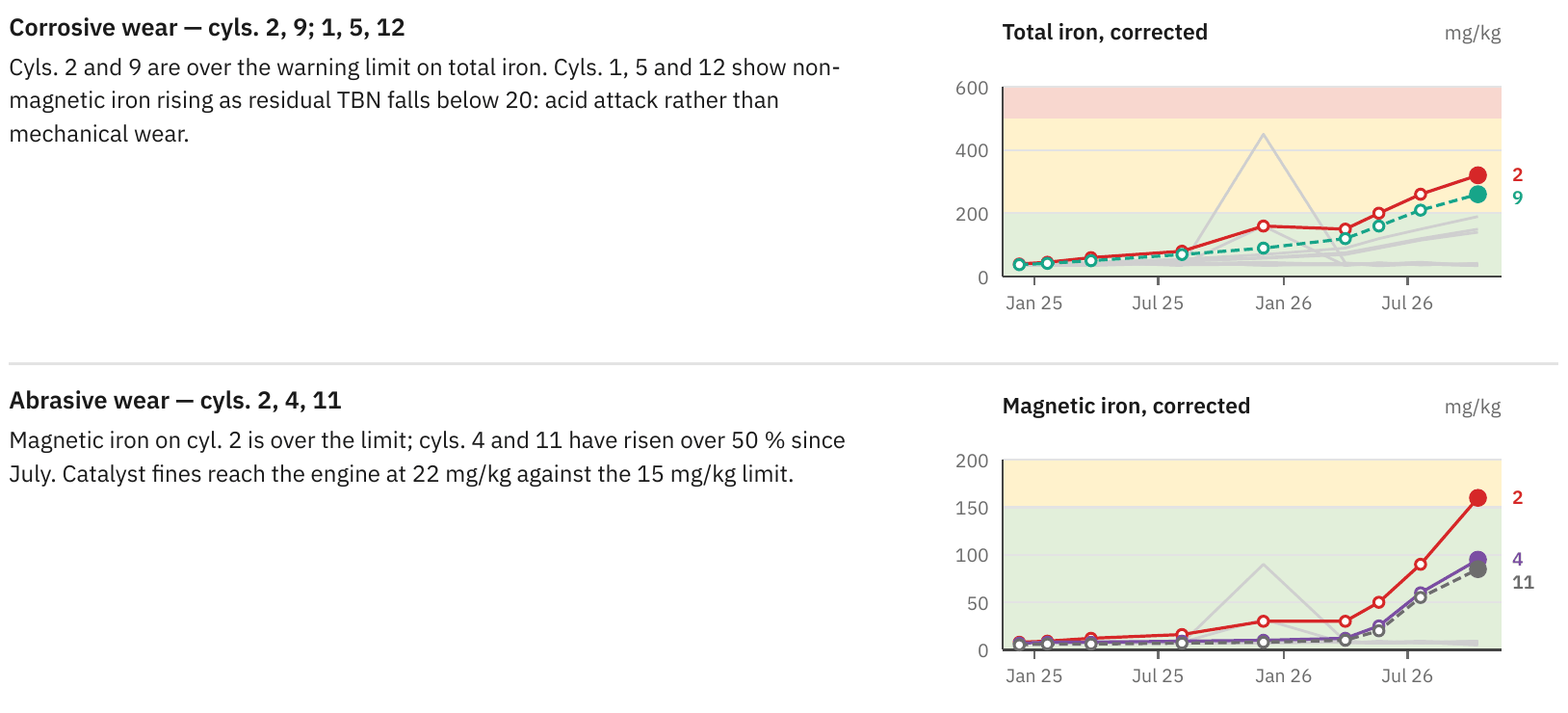
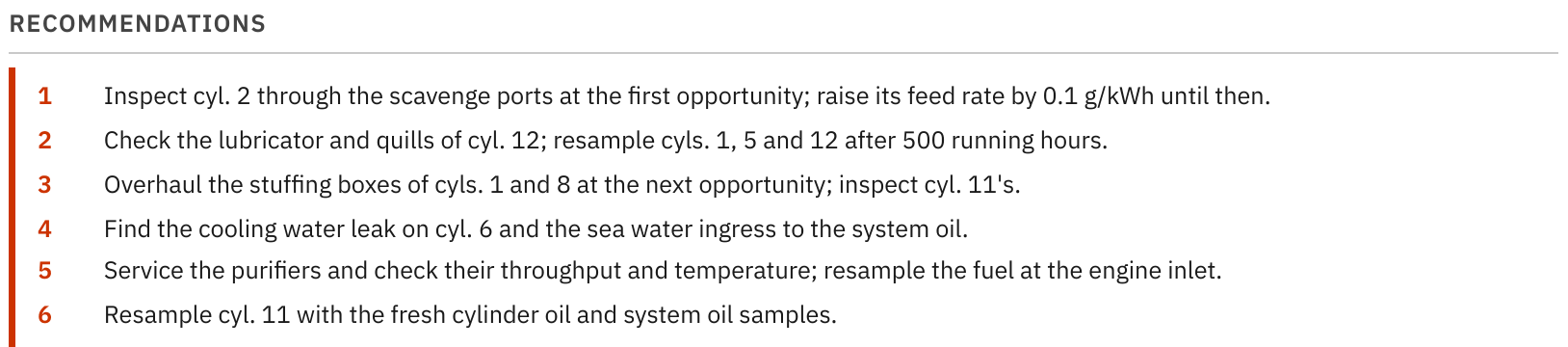
Extracts from a current report, with the vessel's identity removed: a twelve-cylinder engine at one sampling. The report opens with the condition in one line, then the assessment, the results against the engine designer's limits, the findings with the trends behind them, and the recommendations.

Talk to us about your fleet
Tell us the engine types and the number of vessels, and we will come back to you with how sampling would work for you and what the reports would cover.