Flame Marine reports
Flame Diagnostic
Flame Diagnostic is a full engine review for two-stroke marine engines. It reads the fuel, the oil and the engine's performance together and reports the condition of the whole engine.

- Engines
- MAN B&W, WinGD and UE two-stroke crosshead engines, including dual-fuel engines.
- You send
-
- Scavenge drain oil from every cylinder.
- Fresh cylinder oil, fresh system oil and crankcase system oil.
- Fuel from before the purifier and before the engine.
- The Sample Submission Form and the engine performance data sheet, recorded while the samples are taken.
- The bunker analysis for the fuel in use.
- The shop test performance data, once.
Samples are taken at the vessel's usual load. The engine is not stopped.
- Laboratory
- ISO/IEC 17025 accredited, testing to ASTM, ISO and IP methods. Nothing is tested on board.
- The report assesses
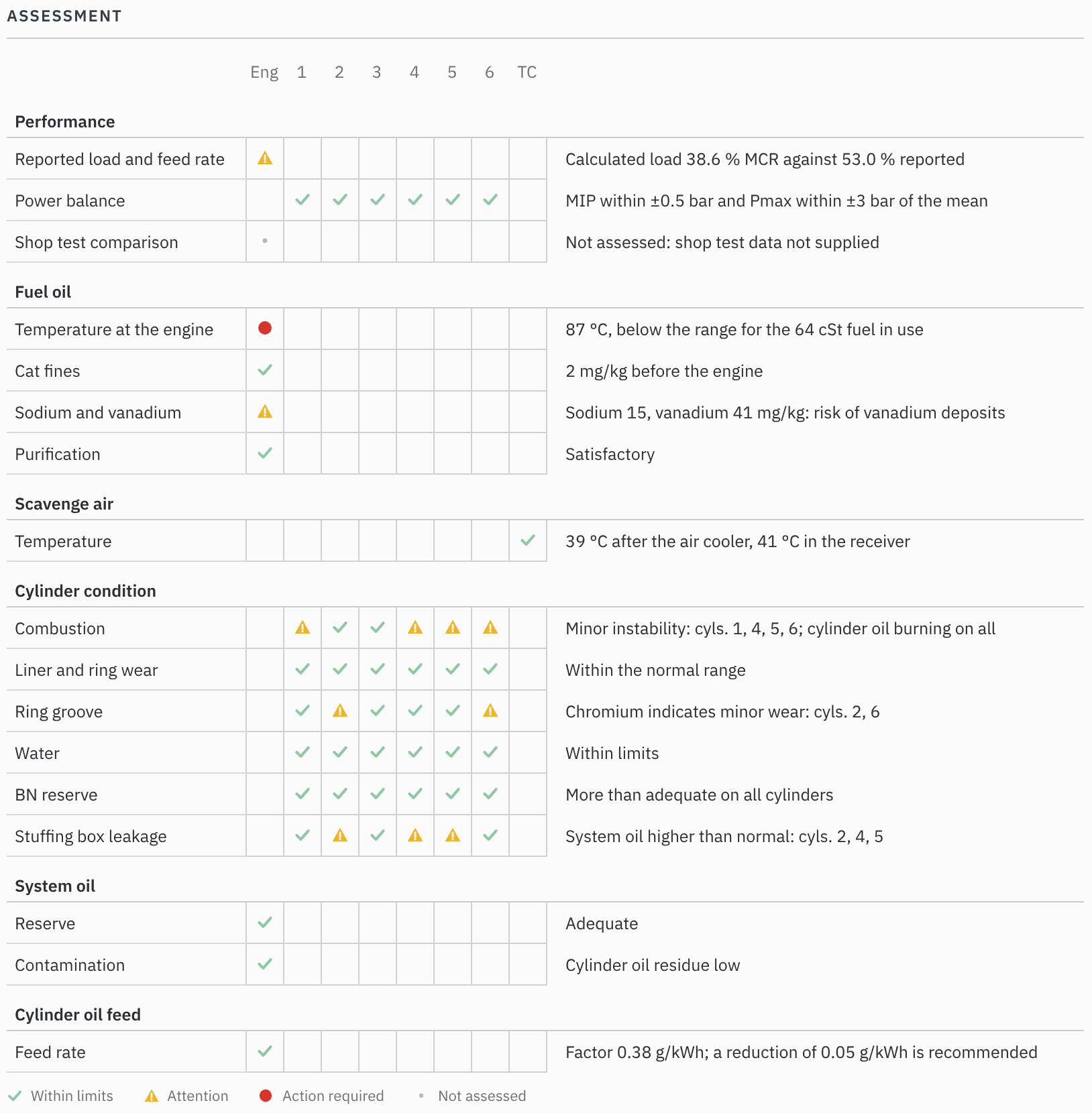
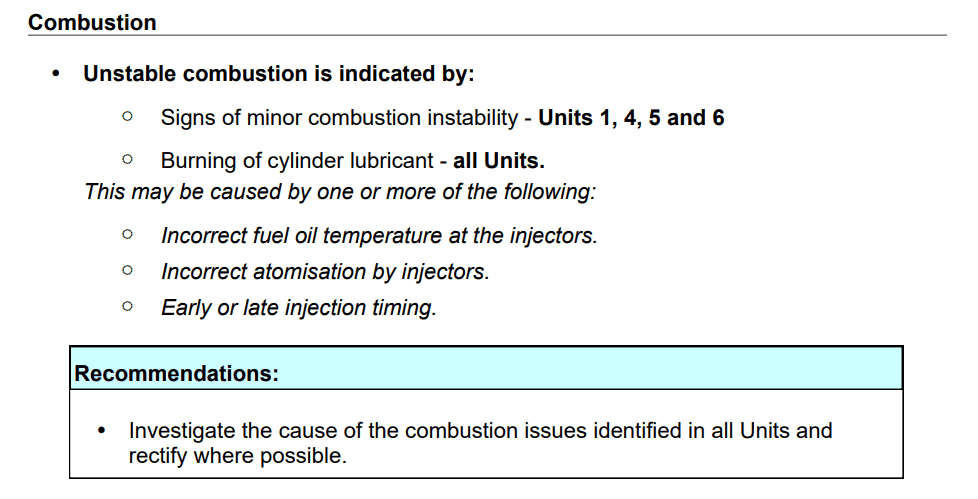
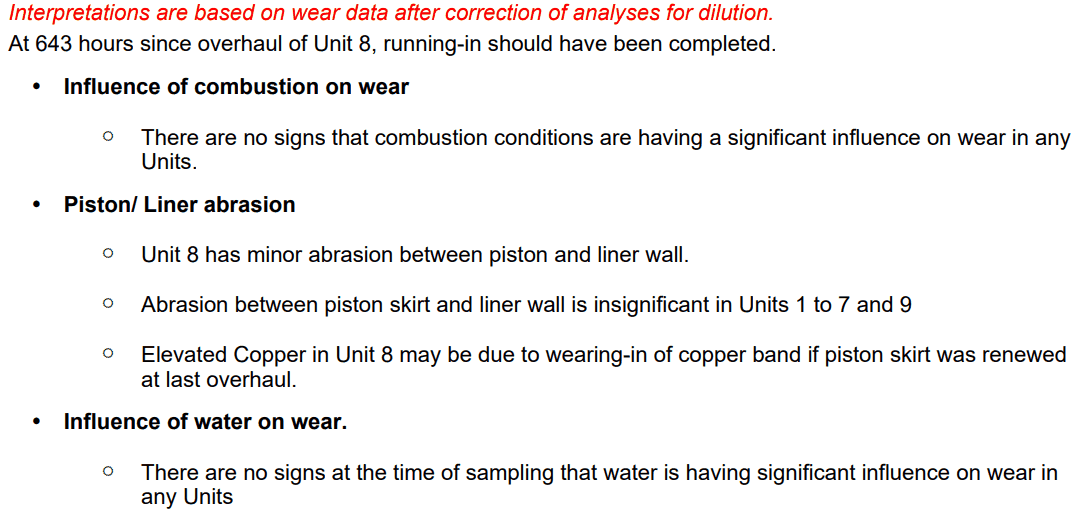
- Performance, fuel oil, scavenge air, combustion, wear, water, system oil and cylinder oil feed. Each is marked normal, caution or action required for the engine, every cylinder and the turbochargers, beside the marks from the previous report.
- You get back
-
- Findings and a recommendation for each of the eight areas.
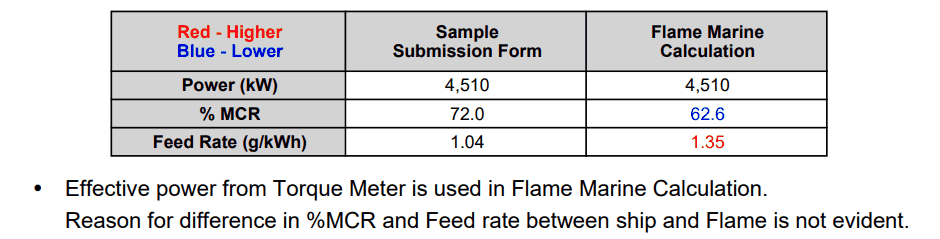
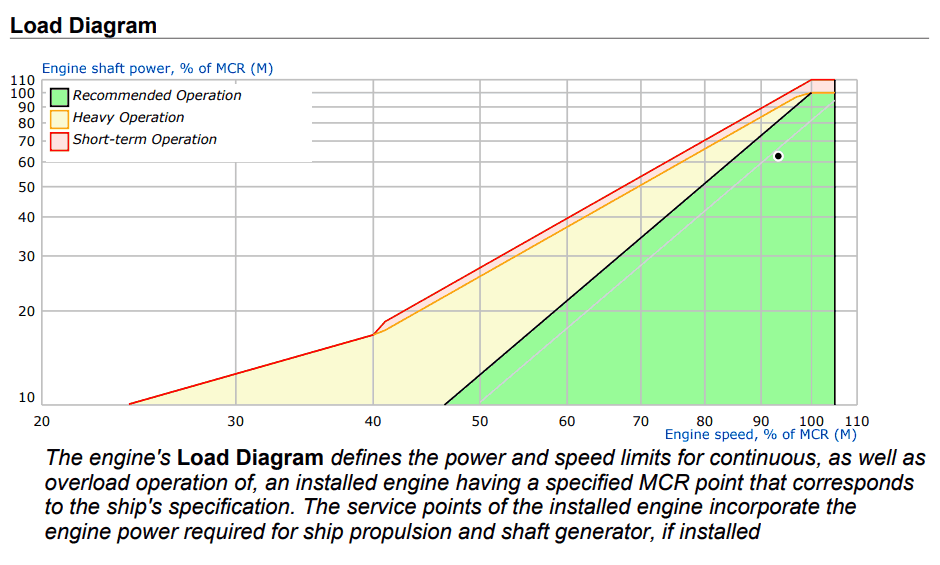
- The reported power and cylinder oil feed rate checked against Flame Marine's own calculation.
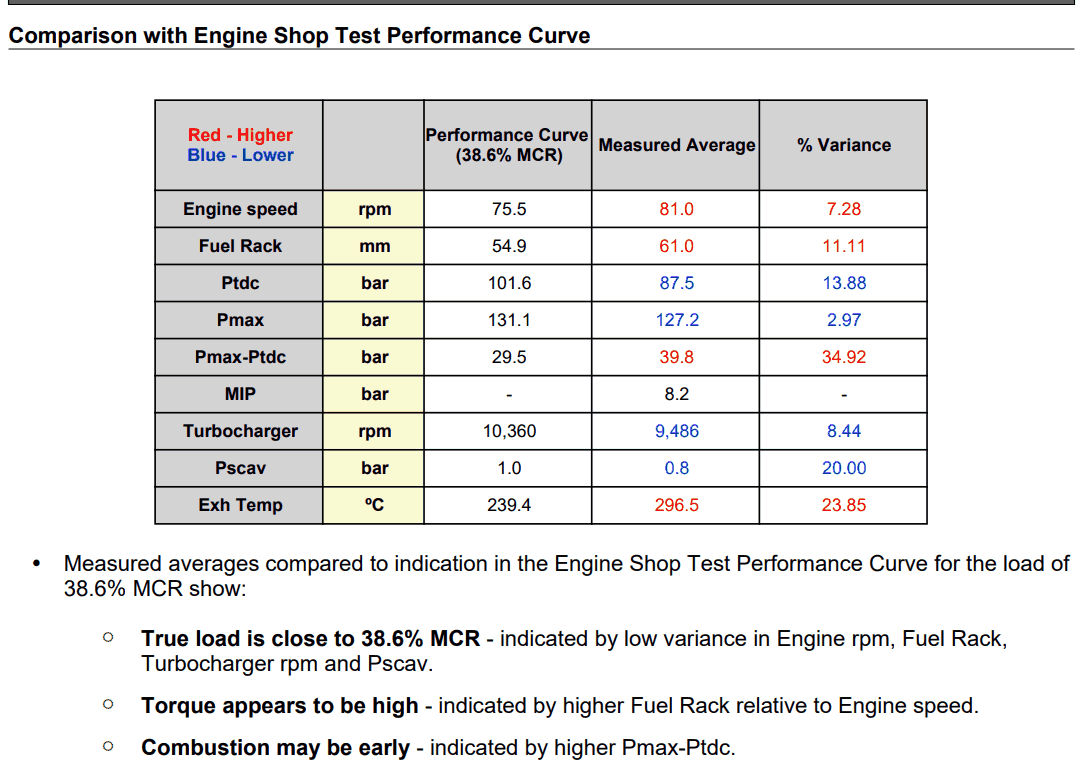
- Measured performance compared with the shop test curve at the same load.
- Compression, maximum and mean indicated pressures and exhaust temperatures for each cylinder, as deviations from the engine mean.
- Fuel on its way to the engine: water, cat fines, sodium, vanadium and sulphur before the purifier and before the engine, purifier efficiency, and fuel temperature against the viscosity the engine needs.
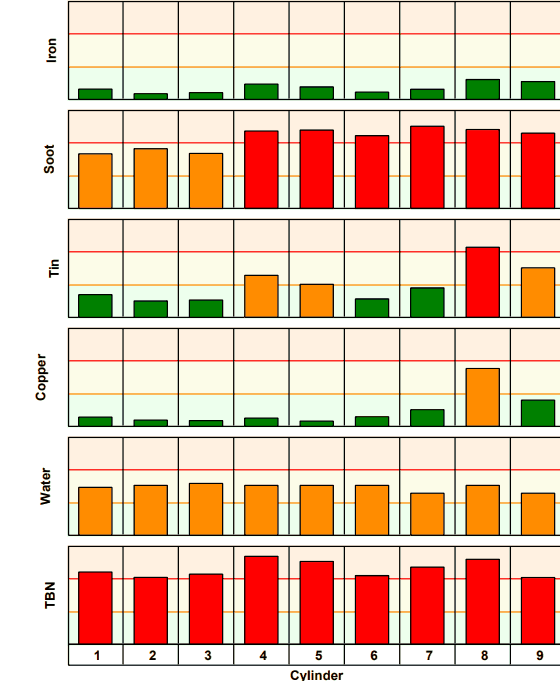
- Drain oil results for every cylinder, as measured and corrected for dilution, with the trend over four samplings: total and magnetic iron, chromium, copper, tin, aluminium, vanadium, soot, dispersancy, BN, calcium, zinc, viscosity and water.
- Total and magnetic iron against residual BN in the engine designer's zones.
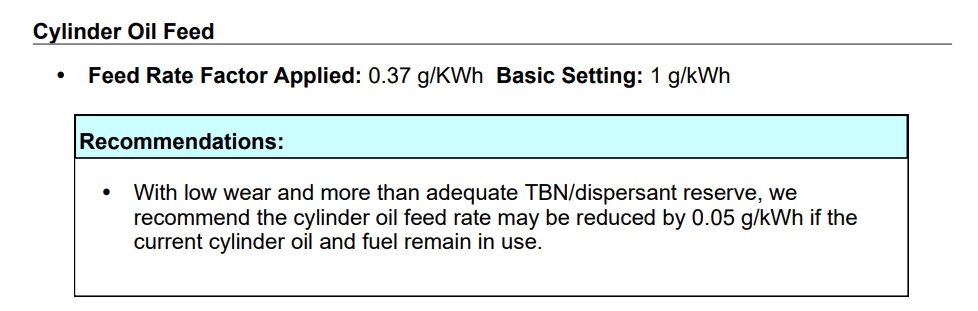
- The cylinder oil feed rate calculated from consumption and power, and a recommended change in g/kWh.
- Liner and piston running hours and wear rates, from the vessel's records.
- System oil condition.
- Length
- About 30 pages.
- Dilution
- Every drain oil result is corrected for the system oil, fuel and water in the sample and reported on a cylinder-oil basis. Dilution and Flame ADT.
Extracts
Inside a Flame Diagnostic report
From current reports for five different vessels, with names and dates removed.
In the engine